Whiplash symptoms: why they can take days to appear after a crash
Understanding delayed whiplash symptoms
Whiplash is one of the most common injuries from road collisions, yet it often behaves differently from other injuries. Many people walk away from a crash feeling fine, only to wake up the next morning with a stiff neck or a dull headache. This delayed onset can be confusing and worrying. Understanding why it happens matters for anyone involved in a road accident, especially when considering next steps for health and recovery.
What happens to the neck during a collision
Whiplash occurs when the head is thrown backward and then forward with force, usually in a rear-end or side-impact crash. The neck's soft tissues - muscles, ligaments, and tendons - stretch beyond their normal range. The sudden movement can cause tiny tears in these tissues, irritate nerves, and inflame the joints between the vertebrae. Even though the force happens in a split second, the damage to the soft tissues can take time to become noticeable.
Adrenaline plays a big role immediately after a crash. The body releases this hormone to help respond to a stressful event. It masks pain, increases blood flow to muscles, and keeps you alert. As a result, you may feel shaken but not injured. Once the adrenaline wears off - often hours later - the true extent of the tissue damage starts to surface. That is when stiffness, soreness, and reduced mobility begin.
Common delayed symptoms to watch for
Neck pain and stiffness are the most reported delayed symptoms, but whiplash can cause a range of other effects that appear gradually. Headaches, particularly at the base of the skull, are very common. Some people develop pain between the shoulder blades or in the lower back. Others notice tingling or numbness in the arms or fingers, which happens when nerves in the neck become irritated.
Reduced mobility can set in slowly. You might find it harder to turn your head fully when reversing the car or checking a blind spot. Some people report dizziness, fatigue, or trouble concentrating. These symptoms may not all appear at once. They can develop over the first 24 to 72 hours after the collision, and in some cases, a few days later.
Why symptoms can be unpredictable
Every person's body responds differently to the same force. Age, general health, and pre-existing conditions like arthritis can affect how quickly symptoms appear. The severity of the crash also matters, but even low-speed bumps can cause whiplash. The position of your head at the moment of impact - whether turned or straight - influences which tissues take the most strain.
Another factor is the delayed inflammatory response. When soft tissues are damaged, the body sends fluid and immune cells to the area to start healing. This process, called inflammation, takes time to build up. It causes swelling, warmth, and pain, but it does not happen instantly. That is why you might feel fine at the scene of the crash and then have difficulty moving your neck the next day.
What this means for documenting your injury
Because symptoms can be late to appear, it is important to pay close attention to how you feel in the days after a road collision. Even if you feel fine at first, do not assume you have escaped injury. Keep a symptom diary. Write down when each symptom started, what it feels like, and how it changes over the day. Note anything that makes it better or worse, such as resting, moving, or applying heat.
A symptom diary becomes part of your medical records and can help a doctor understand the pattern of your injury. It also provides a clear timeline if you later need to discuss your recovery period with a professional. Delayed symptoms are not a sign that the injury is minor. They are simply a feature of how soft tissue injuries behave.
The role of a medical examination
If you develop any neck pain, headaches, or reduced mobility after a crash, see a doctor. A medical examination can assess the range of motion in your neck, check for nerve involvement, and rule out more serious injuries like fractures or disc damage. The doctor may recommend imaging, such as an X-ray or MRI, if the symptoms are severe or do not improve.
Getting a medical opinion early also creates a record of your injury. That record is valuable if you later need to show that the crash caused your symptoms, even if they appeared after a delay. Without that early documentation, it can be harder to link the symptoms to the collision.
Legal considerations for delayed whiplash
In Scotland, personal injury law recognises that not all injuries show up immediately. The legal system allows time for symptoms to develop before you must make a claim. However, it is still wise to seek legal advice as soon as you are aware of an injury. A personal injury solicitor can explain how the timeline works and what evidence you need to gather.
One important piece of evidence is the police report from the crash. If the police attended the scene, the report will record the date, location, and details of the collision. That helps establish that the crash happened and that you were involved. Medical records from your GP or hospital visits show the injury and its progression. The symptom diary you keep at home fills in the gaps between appointments.

Proper documentation is key to building a strong case. Without it, proving that delayed symptoms are connected to the crash becomes harder. This is where the phrase support for a whiplash claim becomes relevant. Medical records, a symptom diary, and a clear timeline all provide support for a whiplash claim. They help show that the injury is real, that it stems from the collision, and that it has affected your daily life.
No win no fee legal support
Many people in Scotland can access no win no fee legal support for whiplash and other personal injuries. This arrangement means you do not pay legal fees upfront. Instead, the solicitor takes their fee from the compensation you receive, only if you win the case. If the claim does not succeed, you typically pay nothing. This makes it possible for anyone to pursue compensation, regardless of their financial situation.
It is worth noting that whiplash claims in Scotland have specific rules and time limits. The standard time limit is three years from the date of the crash, or from the date you first became aware of the injury if the symptoms were delayed. However, waiting too long can make it harder to gather evidence and to link the symptoms to the collision. Acting promptly after symptoms appear is usually the best approach.
Practical steps to take after a road collision
If you are involved in a road accident, take these steps to protect your health and any potential claim:
- Seek medical attention if you have any pain or discomfort, even if it seems mild.
- Record the details of the crash: date, time, location, and the other driver's information.
- Take photos of the vehicles and the scene, if it is safe to do so.
- Keep a symptom diary from the day of the crash onward, noting every change.
- Contact a personal injury solicitor for advice on your options.
Do not assume that because symptoms are delayed, they are not serious. Many whiplash injuries take time to fully develop, and what starts as a mild ache can become a long-term problem. Early treatment, such as physiotherapy or gentle exercises, can improve your recovery period and reduce the risk of chronic pain.
Recovery and what to expect
Most people with whiplash recover within a few weeks to a few months. The recovery period depends on the severity of the tissue damage, your overall health, and whether you follow a treatment plan. Rest is helpful in the first few days, but prolonged rest can slow recovery. Gentle movement and stretching, as advised by a doctor or physiotherapist, often help restore mobility faster.
Some people develop chronic symptoms that last for a year or more. These can include persistent neck pain, frequent headaches, and reduced mobility. If your symptoms do not improve within a few weeks, follow up with your doctor. They may refer you to a specialist or recommend additional treatments.

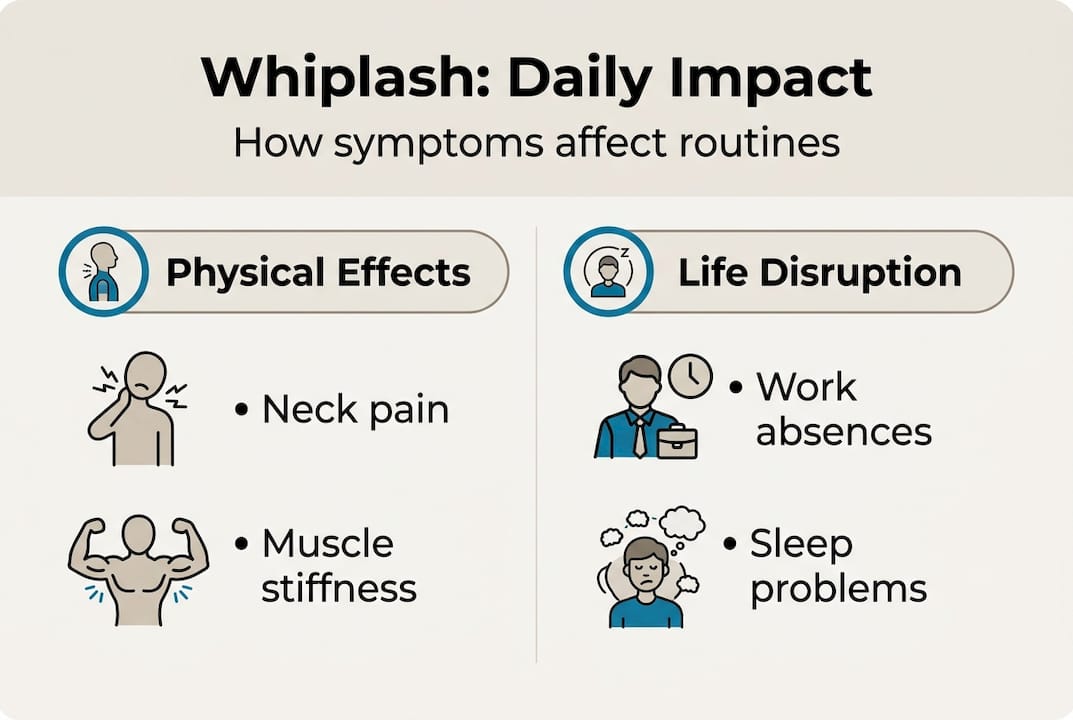
Whiplash can also affect your daily activities. You may struggle to sleep comfortably, drive for long periods, or concentrate at work. These effects are part of the injury and should be included in your symptom diary and medical records. They also form part of any compensation claim, because they show how the injury has impacted your quality of life.
Final thoughts on delayed whiplash
Delayed whiplash symptoms are normal, but they should never be ignored. The gap between the crash and the onset of pain can make it tempting to dismiss the injury or hope it goes away on its own. That approach can lead to unnecessary suffering and may weaken any future claim. Documenting everything from the start gives you the best chance of a full recovery and fair compensation.
If you develop symptoms after a road collision, see a doctor, keep a record, and speak with a personal injury solicitor. They can help you understand your rights and guide you through the process. The sooner you act, the easier it is to connect the dots between the crash and your injury.